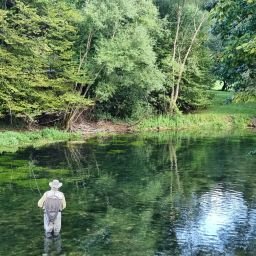
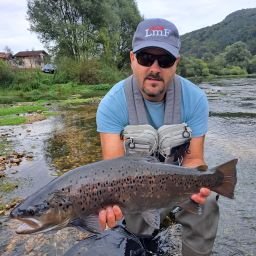
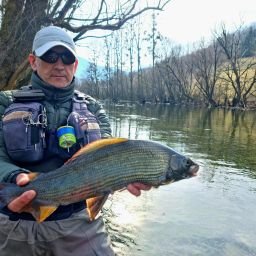
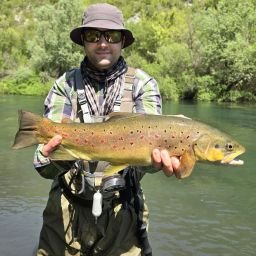
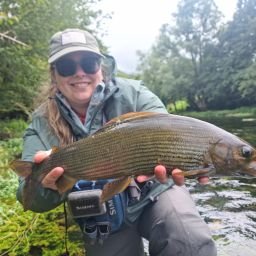
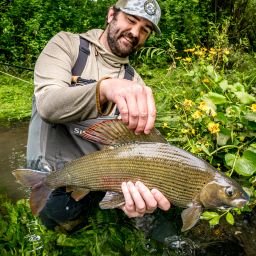
Bosnia and Herzegovina is a fly-fisher’s dream: a compact country threaded with dozens of rivers, each with its own character. From crystal-clear, technical streams teeming with wary brown trout to broader, slower waters holding larger trout and grayling, the variety is striking. Rivers differ not only in fish species and average sizes, but in wading difficulty, water clarity, flow speed, riverbed composition, access and surrounding terrain — all of which shape tactics, gear choice and the kind of experience you’ll have. In the chapters that follow we’ll break down key rivers and river types, compare fish populations and sizes, discuss wading and access considerations, and help you choose the right water for the kind of fly-fishing trip you want.
Chapter 1 — Our suggestion for newbies and beginners
If you’re just starting out, two rivers in Bosnia stand out for learning, confidence-building and plenty of action: the Unac and the Una. Both rivers are well-stocked with rainbow and brown trout, giving newcomers frequent strikes and more opportunities to practice casting, presentation and landing fish.
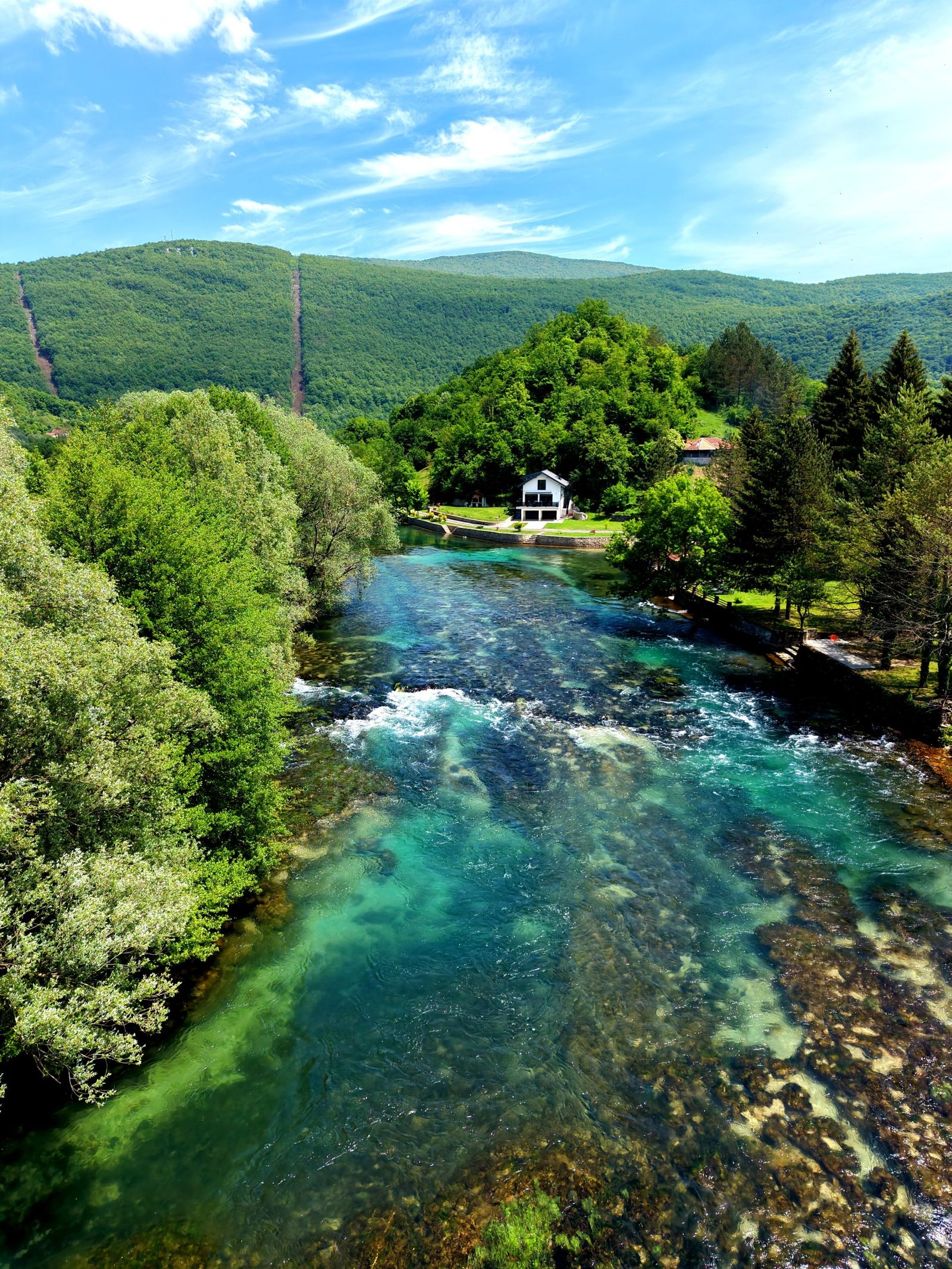
Why Unac and Una work for beginners:
- Consistent fish activity — especially on the Unac — so novice anglers don’t sit long without action.
- Manageable water and wading — many shallow, slow-to-moderate sections that are easier and safer to navigate.
- Good access and family-friendly spots — suitable for kids and group outings, with plenty of places to set up and observe.
- Mixed fishing styles — allow beginners to try dry flies, nymphing and simple streamer work without needing specialist tactics.
Bonus: the Una also offers spectacular sightseeing — dramatic waterfalls and scenic river canyons make it a great destination for non-anglers and families. At the same time, stretches of the Una push into wilder, more technical water that challenge experienced anglers, so the river suits both beginners and advanced fishers.
Start here to build confidence, learn basic techniques, and enjoy steady fishing before moving on to more technical streams.
Chapter 2 — For Intermediate Anglers
This chapter targets intermediate anglers — those with solid basics who want more challenge without extreme technical waters. Recommended rivers: Dabar, Ribnik, Sanica.
Why these rivers suit intermediates:
- Target species — fishing is mostly for grayling, with occasional brown and rainbow trout; fish in these rivers can grow quite large.
- Variable difficulty — stretches can be quite hard at times, but are mostly manageable for anglers with developed skills.
- Skills required — good overhead casting, roll casting, efficient mending and precise dry-fly presentation are often needed to consistently raise fish.
- Wading & access — generally straightforward wading and easy access make them practical day rivers.
- Seasonal note — best fished at the beginning or end of the season (spring and late autumn). Summer low flows can concentrate fish and make conditions much tougher.
These rivers are ideal for anglers stepping up from beginners who want to refine technique, focus on grayling tactics, and pursue larger specimens.
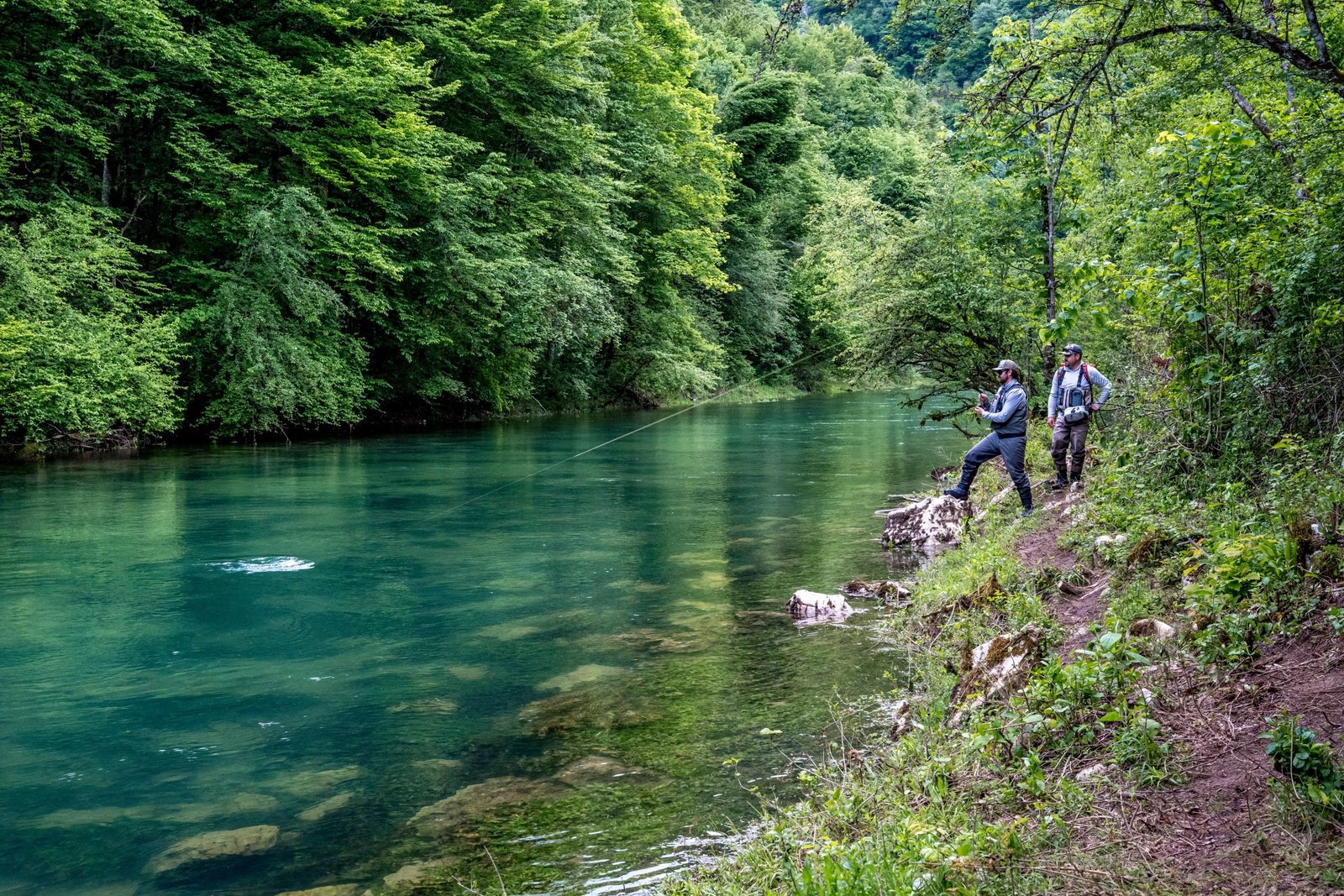
Chapter 3 — For Advanced Anglers
This chapter is for experienced anglers seeking the toughest, most technical waters. Recommended rivers: Pliva, Sana, and Ribnik (in summer low flows).
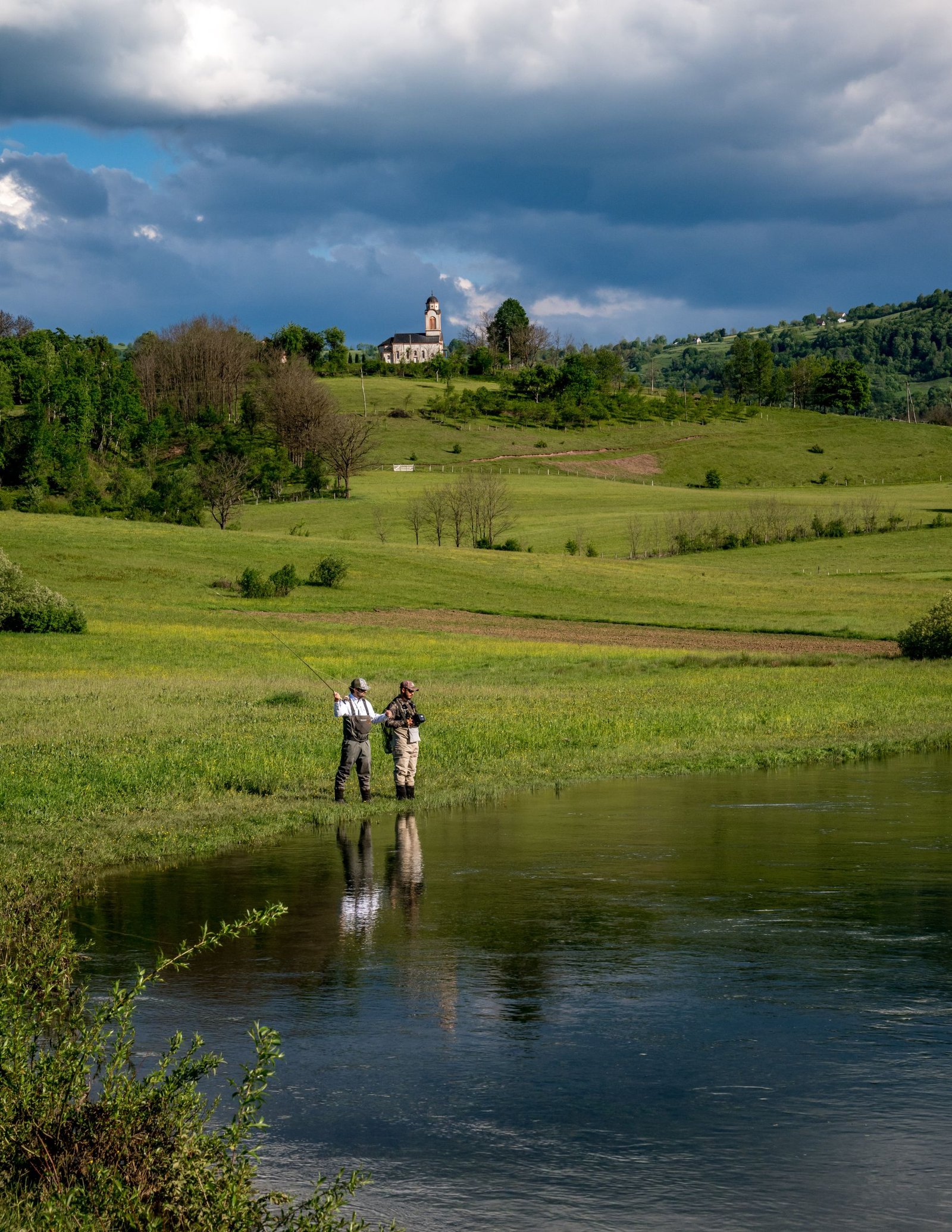
Pliva
- Likely the most difficult river in Bosnia — and possibly Europe — to catch grayling despite their abundance.
- Wading is generally easy, but exceptional casting and mending are required to present tiny flies naturally.
- Thin tippets are standard and fighting fish is tricky because of heavy weed and grassy banks; you must manage drag and play fish carefully.
- Fish grow large and are powerful, so delicate presentation plus strong fish-fighting technique are both essential.
Sana
- One of Bosnia’s top rivers, offering opportunities for every technique (dry fly, nymphing, euro nymphing, streamers).
- Access and wading can be difficult in places; some runs are remote or steep-bank.
- The Sana can have fairly strong riffles and currents in sections, so knowing safe crossing points and current behavior is important.
- Success depends on precise presentation and strong water-reading skills to locate holding lies and the right drift.
Ribnik (summer low water)
- Extremely technical when flows drop: anglers use very fine tippets (around 8X) and tiny dries/emerger patterns (sizes 24–26).
- Fish become extremely wary and easily spooked — stealth, careful approach and excellent eyesight (or optics) are required to detect tiny flies.
- Demands the highest level of finesse, patience and accuracy.
These rivers reward skill, patience and preparation — if you master the techniques, you’ll be fishing some of Europe’s most satisfying waters.